We here at Red-E Supply would like to wish you and your family the best this holiday season. Enjoy being with the ones you love and eating some great food before kicking off 2011.
We are feeling the chill here in Oregon. Hand warmers have been a hot items these past few days as we received the first snow and ice this Winter. We have both small and large sizes. Any walk is better with a pair of these in your pockets. Come over to the site and check them out!
Glove-Sized Hand Warmers
Large Hand Warmers
Still need to find a gift for that adventure enthusiast in your life? We have it covered. We have supplies, gear, tools, and gadgets galore.
Best wishes from Red-E Supply!
Monday, November 29, 2010


Monday, September 27, 2010
CERT/NET/SAR class supplies
Well it's September once again. This means back to school for many kids, as well as adults. Are you taking a CERT (community emergency response), NET (neighborhood emergency team, or SAR (search & rescue) class this season? We have kits built specifically for members of each of these groups/classes. Start with one of our standardized kits. Add any additional equipment that you may need. You'll be fully equipped for your class within 15 minutes! (plus shipping time)
NET Section: http://www.redesupply.com/NET/c40/index.html
CERT Section: http://www.redesupply.com/CERT/c37/index.html
Feel free to contact us with questions or comments!
NET Section: http://www.redesupply.com/NET/c40/index.html
CERT Section: http://www.redesupply.com/CERT/c37/index.html
Feel free to contact us with questions or comments!
Monday, August 2, 2010
New product: Wound Seal
Wound Seal: Blood-Stop Powder
Wound Seal: Blood-Stop Powder w/ Applicator
Here at the Red-E Shop we are carrying several new products designed to immediately stop bleeding from external wounds. One of these products is QR Wound Seal. We are thrilled to be carrying this product, as it is one of the most effective products we have come across to immediately stop bleeding from a cut or puncture until one can make it to a hospital or clinic. It's a great addition to any first-aid kit, and a must-have for hikers, bikers, boaters, or any other kind of adventurers.
The QR Wound Seal comes as a packet of powder. We sell 2 types at www.redEsupply.com. Essentially, the only difference is that one includes an applicator which is used to dip into the powder and spread across the wound. The other just pours onto the wound directly.
Some more information about QR Wound Seal... The FDA has classified this product as an Exempt Class I Device. This is the same as bandages, gauze, etc. It is hypoallergenic, meaning that it has a low risk of causing allergic reactions. It is not metabolized by the body, and introduces nothing into the bloodstream. Because of this, it is also not a drug, and will not conflict with any medications. It is highly effective, and will even work on people with bleeding disorders, or people on anti-coagulant medications. QR Wound Seal does not cauterize the wound. It coagulates the blood at the surface of the wound, forming a scab, which seals and protects the wound from further infection. The powder itself contains strong anti-microbial properties.
Each box contains 2 applications of Wound Seal. We recommend adding this product your existing medical kit right away! We do carry a similar product QuikClot that is also very effective. We will dedicate another post to that product in the near future. Feel free to check them both out and compare on www.redEsupply.com...
Have a good day!
Wound Seal: Blood-Stop Powder w/ Applicator
Here at the Red-E Shop we are carrying several new products designed to immediately stop bleeding from external wounds. One of these products is QR Wound Seal. We are thrilled to be carrying this product, as it is one of the most effective products we have come across to immediately stop bleeding from a cut or puncture until one can make it to a hospital or clinic. It's a great addition to any first-aid kit, and a must-have for hikers, bikers, boaters, or any other kind of adventurers.
The QR Wound Seal comes as a packet of powder. We sell 2 types at www.redEsupply.com. Essentially, the only difference is that one includes an applicator which is used to dip into the powder and spread across the wound. The other just pours onto the wound directly.
Some more information about QR Wound Seal... The FDA has classified this product as an Exempt Class I Device. This is the same as bandages, gauze, etc. It is hypoallergenic, meaning that it has a low risk of causing allergic reactions. It is not metabolized by the body, and introduces nothing into the bloodstream. Because of this, it is also not a drug, and will not conflict with any medications. It is highly effective, and will even work on people with bleeding disorders, or people on anti-coagulant medications. QR Wound Seal does not cauterize the wound. It coagulates the blood at the surface of the wound, forming a scab, which seals and protects the wound from further infection. The powder itself contains strong anti-microbial properties.
Each box contains 2 applications of Wound Seal. We recommend adding this product your existing medical kit right away! We do carry a similar product QuikClot that is also very effective. We will dedicate another post to that product in the near future. Feel free to check them both out and compare on www.redEsupply.com...
Have a good day!
Tuesday, March 16, 2010
FEMA Reminds Americans to Make Sure Their Family is Prepared as They Spring Forward this Year
Release Date: March 12, 2010
Release Number: HQ-10-039
WASHINGTON, D.C. -- The Federal Emergency Management Agency (FEMA) is encouraging Americans to take advantage of the March 14 time change for Daylight Savings as a reminder to ensure their families are prepared for a possible emergency. A few simple steps like checking smoke alarms, developing a family communications plan, and putting an emergency kit together can go a long way toward keeping families safe.
“No matter how much the federal government, the state, or local officials do to prepare, we can’t do it alone – individuals and families must do their part to be ready in case of an emergency,” said FEMA Administrator Craig Fugate. “The public is the most important member of the nation’s emergency management team, and so I encourage everyone, as they spring forward this year, to also take a few minutes to check their smoke alarms and talk through what your family would do during an emergency.”
Information on preparing for emergencies can be found at Ready.gov. Steps include developing a communications plan to ensure family members know how to get in touch with each other during an emergency, putting together an emergency kit, and staying informed of potential risks. It’s important to remember that an emergency could be a large scale catastrophic disaster, or a smaller-scale event like a car accident or house fire.
In addition to visiting Ready.gov, the United States Fire Administration is encouraging families to ensure their homes are equipped with working smoke alarms. A working smoke alarm significantly increases your chances of surviving a deadly home fire so it’s important to test alarms regularly and keep them properly maintained. This includes checking the manufacture/expiration date on the label, replacing the batteries, and cleaning dust away from the slots so that smoke can enter freely.
For more information about home smoke alarms and fire sprinklers, please visit: www.usfa.dhs.gov/smokealarms.
FEMA’s mission is to support our citizens and first responders to ensure that as a nation we work together to build, sustain, and improve our capability to prepare for, protect against, respond to, recover from, and mitigate all hazards.
****
See www.RedEsupply.com for emergency kits and all the supplies to put together your own kit.
Release Date: March 12, 2010
Release Number: HQ-10-039
WASHINGTON, D.C. -- The Federal Emergency Management Agency (FEMA) is encouraging Americans to take advantage of the March 14 time change for Daylight Savings as a reminder to ensure their families are prepared for a possible emergency. A few simple steps like checking smoke alarms, developing a family communications plan, and putting an emergency kit together can go a long way toward keeping families safe.
“No matter how much the federal government, the state, or local officials do to prepare, we can’t do it alone – individuals and families must do their part to be ready in case of an emergency,” said FEMA Administrator Craig Fugate. “The public is the most important member of the nation’s emergency management team, and so I encourage everyone, as they spring forward this year, to also take a few minutes to check their smoke alarms and talk through what your family would do during an emergency.”
Information on preparing for emergencies can be found at Ready.gov. Steps include developing a communications plan to ensure family members know how to get in touch with each other during an emergency, putting together an emergency kit, and staying informed of potential risks. It’s important to remember that an emergency could be a large scale catastrophic disaster, or a smaller-scale event like a car accident or house fire.
In addition to visiting Ready.gov, the United States Fire Administration is encouraging families to ensure their homes are equipped with working smoke alarms. A working smoke alarm significantly increases your chances of surviving a deadly home fire so it’s important to test alarms regularly and keep them properly maintained. This includes checking the manufacture/expiration date on the label, replacing the batteries, and cleaning dust away from the slots so that smoke can enter freely.
For more information about home smoke alarms and fire sprinklers, please visit: www.usfa.dhs.gov/smokealarms.
FEMA’s mission is to support our citizens and first responders to ensure that as a nation we work together to build, sustain, and improve our capability to prepare for, protect against, respond to, recover from, and mitigate all hazards.
****
See www.RedEsupply.com for emergency kits and all the supplies to put together your own kit.
Thursday, December 3, 2009
RED CERT HARD HATS
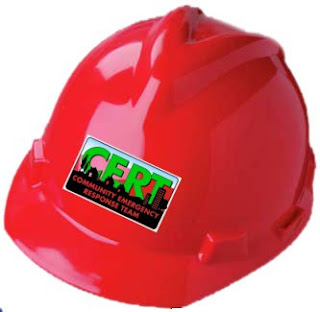
Red CERT Hard hats? I thought that CERT hard hats were supposed to be Lime or Green?? Well, it ends up that some CERT teams prefer red hard hats, and others have the team leaders in red hard hats. If you think about it, how many "civilians" recognize green as an an emergency responder color? We are all trained to recognize red. Firefighters all have red helmets. EMTs often have red caps. Fire trucks are red. Ambulances are red. I am sure you can think of more examples. And, the idea of having the team leaders with a different color hard hat than the rest of the team makes a lot of sense. In a real disaster, chaos reigns supreme. With everyone milling about trying to help, how do the teams find their leaders and get organized. Flashing lights help, but a red hard hat on the team leaders also will help make them stand out. But, does anyone actually sell RED CERT hard hats? It ends up that you can get them at a discount price here: RED CERT HARD HAT

Friday, July 3, 2009
When Temperatures Soar – What if You Don’t Have Air Conditioning?
Many households are not equipped with air conditioning. Extreme heat events may be few and short in duration where you live, and many people may anticipate that they can cope … for a while. For some, however, extreme heat poses a serious health risk and their ability to tolerate even short periods of high heat is poor: examples include infants and small children; people who are sick, persons with chronic disease, mental illness or who are physically fragile; and those who cannot escape exposure such as outdoor workers.
According to the Center for Disease Control, these are the main things affecting your body’s ability to cool itself during extremely hot weather:
According to the Center for Disease Control, these are the main things affecting your body’s ability to cool itself during extremely hot weather:
- High humidity. When the humidity is high, sweat won’t evaporate as quickly, which keeps your body from releasing heat as fast as it may need to.
- Personal factors. Age, obesity, fever, dehydration, heart disease, mental illness, poor circulation, sunburn, and prescription drug and alcohol use can play a role in whether a person can cool off enough in very hot weather.
In General
- Stay out of the direct sun.
- Protect your skin if you must be out of doors; cover arms, legs, head, neck with lightweight, light-colored and loose-fitting clothing and a wide-brimmed hat. Use sunscreen, SPF 30 or greater.
- Postpone physical activity until the heat wave passes or to cooler parts of the day: early morning or late evening.
- If you must be active, slow down and take frequent breaks in the shade.
- Drink water or dilute sports drinks; stay hydrated. Drink regularly and before you are thirsty. Avoid dehydrating beverages such as those with caffeine or alcohol in them.
- Check on others – particularly those who may be more at risk for heat sickness. Keep an eye on coworkers and fellow recreationists for signs of illness. Collapse, confusion, seizure, vomiting, diarrhea, are all signs of serious heat illness, possibly heat stroke or shock, and require immediate medical attention.
- NEVER leave children, frail persons or pets in a car or confined in a hot place – not even for a few minutes.
- In your home, use fans* to cool and move inside air when outside temperatures are hotter than inside.
- Move to cooler parts of the house. Basements, lower stories and rooms on the north side of the house are often significantly cooler.
- Turn off lights and appliances that are not needed and that generate heat. Defer using appliances such as your oven, cook top, dishwasher until it cools down.
- If you have an attic ventilation fan* – turn it on to circulate trapped hot air to the outside.
- Wipe your face, neck and chest with cool, wet washcloths and take cool showers for added comfort. Ice packs, wrapped in a towel, may be used for short periods of time.
- Close curtains to insulate and keep sun and radiant heat from warming inside.
- When temperatures cool, (often when afternoon winds pick up), open windows to allow the breeze to flow through. Note: be careful about open doors and windows when you are not home or when you are asleep. Consider upper story windows that would be out of reach to would-be intruders.
- Consider air-conditioned* activities during the hottest part of the day: visit the library, see a movie, do some light shopping.
- If you’re having trouble staying cool, let family, a friend or neighbor know. If you’re feeling ill from the heat, call for medical help!
At Home
* assumes no power outage
Reprinted and edited from original posting from:
Peggy Peirson, Emergency Services Coordinator
Benton County Emergency Management, Search & Rescue
180 NW 5th Street, Corvallis, OR 97330
Friday, June 12, 2009
Lightning Safety
In the
A typical thunderstorm is 15 miles in diameter and lasts 20 to 30 minutes. Only 10 percent of the estimated 100,000 thunderstorms that occur each year are classified as “severe.”
All thunderstorms are dangerous and are capable of producing lightning
that can cause death, injury, and property damage and can start fires.
A thunderstorm is considered “severe” by the National Weather Service if it produces hail that is at least three quarters of an inch in diameter, has winds in excess of 58 miles per hour, or produces a tornado. In these conditions, National Weather Service will issue a WARNING – which means that a hazardous event is imminent or occurring.
If conditions favor the occurrence of a severe thunderstorm within the next six to twenty-four hours for a particular region, a WATCH will be issued.
Stay alert to the signs of an approaching thunderstorm: darkening skies, flashes of lightning, thunder, increasing winds. Listen to a NOAA Weather radio or local media for broadcast of warnings or watches.
~ Thunderstorms may occur singly, in clusters or in lines.
~ Lightning can strike as far as 10 miles away from any rainfall – possibly beyond the distance where any thunder can be heard.
~ If you can hear thunder, you are in danger from lightning.
~ Strong thunderstorms can produce large and damaging hail.
~ High winds and powerful downbursts can accompany thunderstorms.
If you suspect that conditions that could bring lightning are developing:
~ Find shelter in a fully enclosed building or car. Keep car windows up and avoid convertibles.
~ Stay clear of telephone lines and metal pipes (irrigation, fences, etc.) that can conduct electricity. Unplug appliances. Avoid using the telephone or any plug-in electrical appliances.
~ Keep away from open doors and windows, fireplaces, radiators, stoves, sinks and any plug-in electrical appliances.
~ Postpone taking a bath, shower or running water for any other purpose. Remember, in older houses, tubs and the plumbing may be metal.
~ Turn off the air conditioner and other electrical appliances. Power surges from lightning can overload the compressor and result in a costly repair job.
~ Draw blinds and shades over the windows, as difficult as that may be when you want to watch the lightning. When lightning strikes close by, it can cause windows to break due to outdoor objects blown about by the wind or struck by lightning.
If you're caught outside:
~ The summits of mountains, crests of ridges, slopes above the timberline and large meadows are extremely hazardous places to be during lightning storms. If you are caught in an exposed place, quickly descend to a lower elevation, away from the direction of the approaching storm, and squat down with feet together – keeping your head low. A dense forest located in a depression provides the best protection. Avoid taking shelter under isolated trees or trees much taller than adjacent trees. Stay away from water, metal objects and other substances that will conduct electricity long distances.
~ Stay in the car if you are travelling. Automobiles generally offer good lightning protection.
~ If you are in the woods, take shelter under shorter trees.
~ If you are boating, swimming or in the open (golf, agriculture work, sports, etc.) - get to dry land and find shelter immediately.
Protect yourself outside:
~ Don't take clothes off the clothesline.
~ Don't "hurry" to finish mowing your lawn before the storm comes.
~ Keep away from fences, metal clotheslines, irrigation pipes, telephone lines, power lines, pipelines and any electrically conductive elevated objects.
~ Avoid hilltops, open spaces, isolated buildings, exposed sheds or other metal structures. Descend from ridges and mountains on the leeward side.
~ Don't handle flammable materials in the open.
~ Don't use metal objects such as fishing rods and golf clubs! Golfers wearing cleated shoes and holding metal clubs are particularly good lightning rods!
~ Avoid the highest object in the area. If only isolated trees are nearby, the best protection is to crouch (not lay down) in the open, keeping twice as far away from isolated trees as the trees are high. Whenever lightning is nearby, take off backpacks with either external or internal metal frames. In tents, stay at least a few inches away from metal tent poles.
~ Don't pitch your tent close to the larger trees in an area. These are the trees at risk of lightning strikes.
~ Go to a low-lying, open place away from trees, poles or metal objects.
~ Make sure the place you go to is not subject to flooding.
~ Stop tractor work, especially when the tractor is pulling metal equipment and dismount. Tractors are often struck by lightning.
~ Get out of the water and off small boats. If this is possible, position yourself as low in the boat as possible.
BE A VERY small TARGET:
~ Lightning takes the path of least resistance to the ground. Since air is a very poor conductor, lightning seeks anything better - and an upright human being is far better for its purpose than air. Stick up above the grass and trees when you are hiking and you become a prime target!
~ Squat low to the ground. Place your hands on your knees and your head between them. Make yourself the smallest target possible. By squatting with your feet close together, you have minimal contact with the ground, thus reducing danger from ground currents.
~ If the threat of lightning strikes is great, your group should not huddle together but spread out at least 15 feet apart. If one member of your group is jolted, the rest of you can help.
~ If you can't get out of the open, put your pack, walking stick, other belongings, about 30 feet away from you, propped up high, and huddle on the ground.
~ Don't sit down, you make a larger target. Crouch down (between two boulders if possible) on your feet on top of your rolled up sleeping bag, foam pad, coiled rope or any other supplementary insulation you have and ride out the storm.
~ Do not lie flat on the ground -- this makes you a larger target.
Yes, you can count the number of seconds between the lightning flash and the sound of thunder to determine your distance from the lightning stroke. Light travels at about 186,000 miles per second. Sound travels considerably more slowly. The distance to a lightning stroke is the time it takes for the sound to reach you after you’ve seen the lightning, divided by the speed of sound. If you assume the speed of sound to be .2 (2/10) miles per second it would take 5 seconds for the sound of thunder to travel one mile; or for every second – the lightning is 1000 feet away.
More about Thunderstorms and Lightning:
For more information on lightning safety, visit the National Weather Service on line at http://www.lightningsafety.noaa.gov/
Lightning and Lightning Safety - An Introduction
Why do some clouds produce lightning and others don’t?
Lightning Safety Outdoors
Safe Shelters and Indoor Safety
The Medical Aspects of Lightning
Printed by RedEsupply.com with permission from PEIRSON Peggy [Peggy.PEIRSON@Co.Benton.OR.US], Emergency Coordinator, Benton County Oregon.
Subscribe to:
Posts (Atom)